
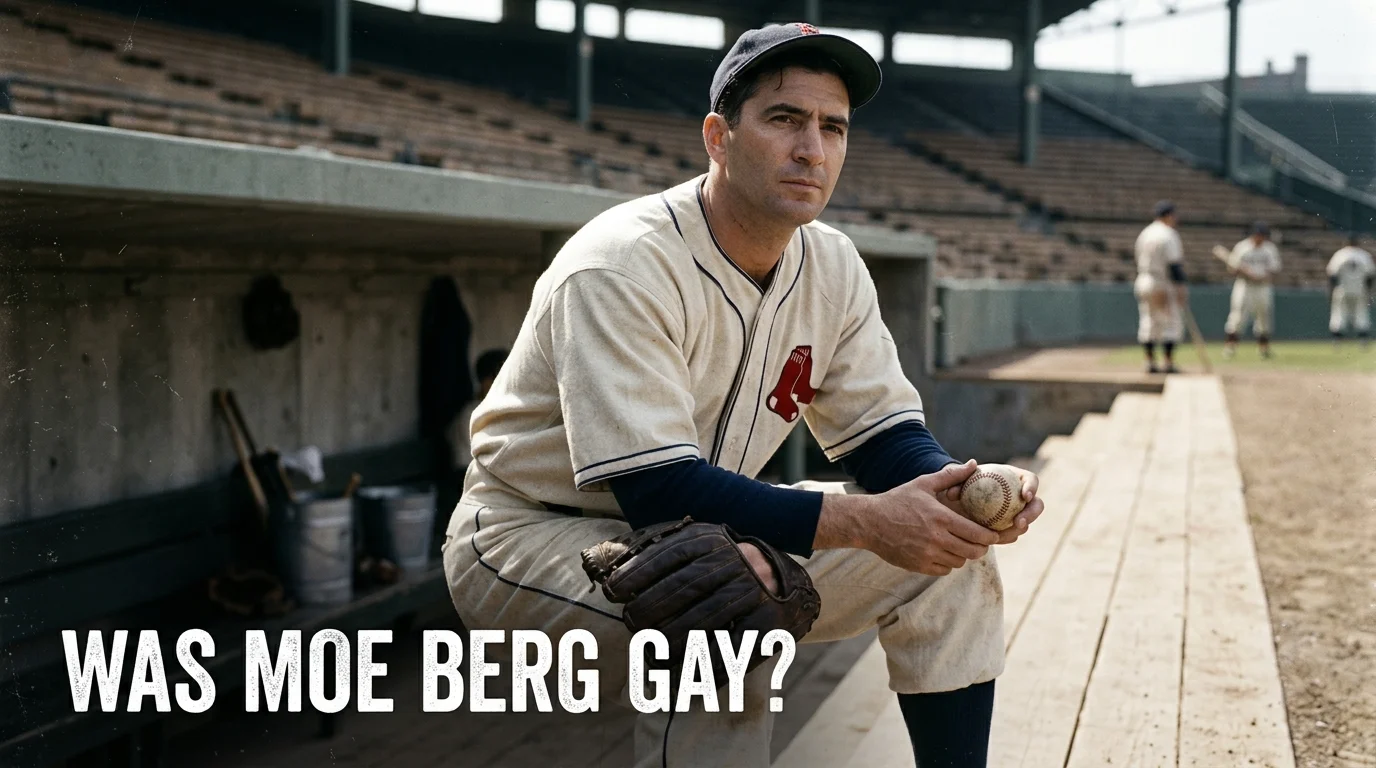
Was Moe Berg gay? There is no conclusive historical evidence proving that he was gay. Rumors followed the baseball player and wartime spy, partly because he guarded his private life closely. Later portrayals, especially The Catcher Was a Spy, gave those rumors greater attention.
| Key fact | What is known |
|---|---|
| Full name | Morris “Moe” Berg |
| Born | March 2, 1902 |
| Died | May 29, 1972 |
| Known for | Major League Baseball and wartime intelligence work |
| Married | No |
| Confirmed sexual orientation | Unknown |
| Known relationship | Long relationship with Estella Huni |
| Gay rumors | Yes, but never conclusively verified |
| Film portrayal | Strongly suggests he was gay or bisexual |
The Short Answer About Moe Berg’s Sexuality
The surviving evidence does not provide a definitive answer about Berg’s sexual orientation. He never publicly identified himself as gay, bisexual, or heterosexual. Accounts from acquaintances include rumors about men alongside documented romantic relationships with women.
That uncertainty matters when discussing a private person from an earlier historical period. Modern labels cannot confidently be assigned without convincing evidence. The most accurate conclusion is that his sexuality remains unknown.
Why Did People Question Whether Moe Berg Was Gay?
Questions about his sexuality existed during his lifetime rather than appearing only after his death. Some baseball players recalled hearing rumors about him from other players. His unusual privacy and lifelong bachelorhood likely helped those stories persist.
According to accounts later collected by biographers, Berg also behaved affectionately toward some male teammates. Such behavior caused speculation within professional baseball’s strongly masculine culture. It still does not establish a person’s sexual orientation.
His personality added another layer to the mystery. He revealed little about his personal affairs and disliked answering private questions. That secrecy characterized many parts of his life, not only his romantic relationships.
Readers interested in how private lives become subjects of public curiosity can also read Tablogy’s guide to Kevin Hart’s wife. It shows how relationship histories often become part of broader biographical interest. Verified details remain more useful than assumptions in either case.
What Did Berg’s Baseball Teammates Say?
Accounts from former teammates provide evidence on both sides of the discussion. Some players remembered hearing other baseball players describe him as gay. Yet teammates who knew him personally also recalled his interest in women.
Former Red Sox player Jack Wilson rejected the idea that Berg had pursued male teammates. Bobby Doerr remembered affectionate joking but also knew about his relationships with women. These recollections demonstrate why historians cannot reach a firm conclusion.
Personal testimony also has limits. Someone can know a colleague for years without knowing every private relationship. Testimony can establish what witnesses observed, but it cannot automatically establish someone’s private identity.
Was Moe Berg Gay According to His Biographers?
Nicholas Dawidoff examined the question while researching his 1994 biography, The Catcher Was a Spy. His research uncovered rumors and ambiguous anecdotes but no decisive proof. The resulting historical picture remained uncertain rather than conclusive.
One intriguing story involved an Englishman’s personal correspondence with Berg. Another concerned speculation about his relationship with Duncan Robertson, son of physicist H. P. Robertson. Neither episode provides enough evidence to establish a sexual relationship.
Robertson later offered a more complicated interpretation of Berg’s attractions. He suggested that Berg might have been attracted to people regardless of gender. That remained Robertson’s interpretation, not a confirmed statement from Berg himself.
This distinction separates historical evidence from speculation. A witness can offer an impression based on personal experience. Historians still need corroborating evidence before presenting that impression as established fact.
His Relationship With Estella Huni
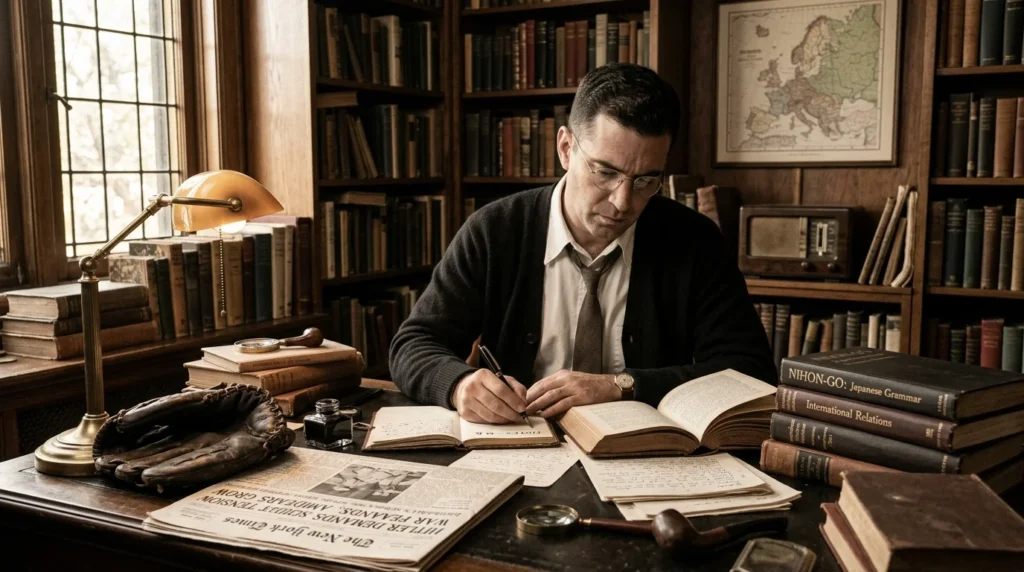
One significant piece of evidence involves Estella Huni, with whom Berg maintained a lengthy romantic relationship. Their relationship reportedly lasted more than a decade. Huni’s son, Paul, later described the pair as having a serious love affair.
Photographs of the couple also survived. Their relationship therefore has substantially stronger documentation than most claims surrounding possible male partners. Still, a relationship with a woman would not automatically exclude bisexuality.
Other accounts described Berg pursuing women socially. Documentary filmmaker Aviva Kempner highlighted testimony from Babe Ruth’s daughter, Julie Ruth Stevens. She remembered him showing romantic interest during a 1934 voyage to Japan.
Historian John Thorn has also discussed Berg’s reputation at State Department gatherings. Accounts suggested he sometimes arrived alone but left with female company. These stories challenge any simple claim that he exclusively pursued men.
For another example of how public relationships become intertwined with celebrity biographies, see Tablogy’s Colin Farrell biography. Separating documented relationships from rumors is especially important when discussing someone’s sexuality. The same standard should apply to historical figures.
Was Moe Berg Gay in The Catcher Was a Spy?
The 2018 movie The Catcher Was a Spy gives the sexuality question much greater prominence. Paul Rudd portrays Berg as a deeply private man whose attraction to men is strongly implied. Several scenes intentionally encourage viewers to consider that interpretation.
The movie includes questions from other characters about his sexuality. It also presents suggestive interactions between Berg and a Japanese man. These choices helped make sexuality part of the film’s depiction of secrecy.
Yet a biographical drama is not the same thing as a historical record. Screenwriter Robert Rodat acknowledged taking dramatic liberties when interpreting uncertain evidence. The film therefore should not be treated as confirmation of Berg’s sexual orientation.
This distinction helps explain much of the modern interest in the question. Viewers may finish the movie believing its portrayal reflects an established historical fact. The surviving evidence is considerably less definite.
What The Spy Behind Home Plate Found
Aviva Kempner took a different approach in the documentary The Spy Behind Home Plate. Her research team interviewed people connected with the former player and examined available historical material. Kempner said they found nothing verifying that he was gay.
Instead, her documentary emphasized evidence of relationships with women. This included his lengthy involvement with Estella Huni and accounts from people around professional baseball. The documentary does not claim that these facts prove heterosexuality.
That difference between the feature film and documentary is useful. One work uses ambiguity to build a dramatic character. The other focuses more on claims its researchers believed they could document.
Neither approach gives modern readers access to Berg’s private thoughts. He left no widely accepted declaration settling the issue. Historical caution is therefore more appropriate than certainty.
Why His Secretive Life Encouraged Speculation
Berg’s private nature was extraordinary even outside his romantic life. He became known for withholding information, avoiding conventional routines, and resisting personal questions. Those habits later fit naturally with his reputation as an intelligence operative.
He played professional baseball before working for the Office of Strategic Services during World War II. His intelligence assignments included investigating Germany’s progress toward developing an atomic bomb. He famously attended a lecture by physicist Werner Heisenberg while carrying a weapon.
His unusual biography encouraged later writers to search for hidden explanations throughout his personal life. Secrecy became central to his public image. Sexuality consequently became another mystery people attempted to solve.
Tabloids publish similar profiles that examine the private and professional sides of prominent figures. Its Taylor Lautner career and personal-life profile offers another example. Such biographies work best when confirmed information stays separate from rumor.
Did Moe Berg Ever Marry?
Berg never married and had no known children. His siblings Sam and Ethel also remained unmarried. That family pattern has generated additional theories about why the three siblings avoided marriage.
Remaining unmarried does not reveal someone’s sexual orientation. Plenty of heterosexual people never marry, while gay people historically entered heterosexual marriages for many reasons. Bachelorhood is therefore context, not proof.
His relationship with Huni further complicates assumptions based on marital status. A person can have a serious long-term relationship without marrying. The absence of a wife tells us little by itself.
What Can Historians Say With Confidence?
Several points are reasonably clear from the available evidence. Rumors about Berg’s sexuality existed, and later biographers investigated them. Credible documentation also shows significant romantic involvement with women.
What historians cannot establish is how Berg privately understood his sexuality. There is no definitive statement from him identifying as gay or bisexual. Evidence for specific sexual relationships with men also remains inconclusive.
That makes “unknown” the strongest historical answer. It recognizes the surviving evidence without turning speculation into biography. It also leaves room for possibilities that the historical record cannot resolve.
Why the Question Remains Popular
The question gained renewed visibility after Paul Rudd portrayed the former catcher in the 2018 movie. The film connected Berg’s secrecy as a spy with secrecy surrounding his sexuality. That storytelling choice gave audiences a compelling psychological explanation.
Real lives rarely provide such neat answers. A private person can leave behind contradictory recollections, incomplete correspondence, and unanswered questions. Berg appears to have done exactly that.
His story remains compelling without resolving his sexuality. He combined professional baseball, advanced education, international travel, languages, and wartime intelligence work. Few twentieth-century American sports figures followed a comparable path.
Frequently Asked Questions
Was Moe Berg gay?
There is no conclusive evidence establishing that he was gay. Rumors existed during his lifetime, and later films explored them. Historical sources also document serious relationships and romantic interest involving women.
Was he bisexual?
Bisexuality has also been suggested by commentators and people who discussed his personal life. Berg never publicly identified himself as bisexual. The available evidence cannot confirm the label.
Did Moe Berg have a girlfriend?
Yes, his best-documented romantic relationship was with Estella Huni. Their relationship reportedly continued for more than a decade. Her son later spoke publicly about their close relationship.
Did he ever get married?
No, Berg never married. His lifelong bachelor status contributed to later speculation about his private life. It does not establish his sexual orientation.
Why does the movie portray him as gay?
The Catcher Was a Spy uses historical rumors and ambiguity as part of its characterization. The film strongly implies same-sex attraction through fictionalized dramatic scenes. Those scenes should not be confused with confirmed historical events.
Is The Catcher Was a Spy completely historically accurate?
The movie is based on real people and events but uses dramatization. Its portrayal of Berg’s sexuality goes beyond what surviving evidence can prove. Documentary treatments have taken a more cautious position.
The Bottom Line
So, was Moe Berg gay? Nobody can establish that conclusively from the surviving historical record. Contemporary rumors and later suggestions suggest he may have been attracted to men. There is also substantial evidence that he pursued women and maintained a lengthy relationship with Estella Huni.
Calling him definitively gay would turn an unresolved historical question into a fact. Calling him definitively heterosexual would create the same problem. The evidence supports a simpler conclusion: his sexual orientation remains unknown, much like several other private aspects of his unusual life.
His enduring fascination comes partly from that uncertainty. He moved between baseball, scholarship, international travel, and wartime espionage while revealing remarkably little about himself. His sexuality remains one unanswered question within a life built around privacy and secrets.