
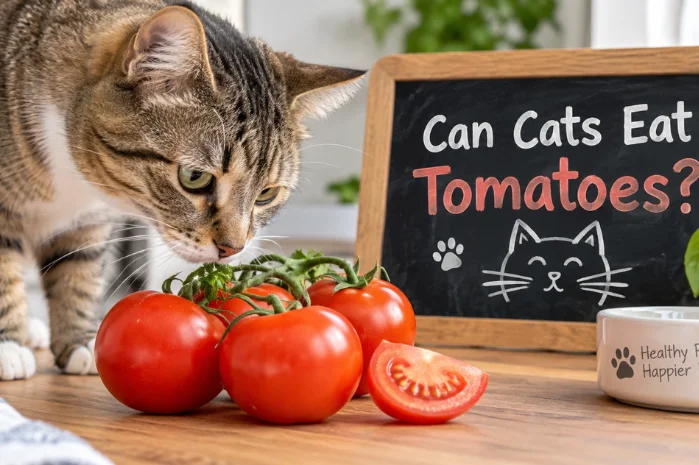
Can cats eat tomatoes without getting sick? A tiny amount of fully ripe red tomato is generally non-toxic. Green tomatoes, stems, leaves, and vines are different and should be avoided by your cat.
Quick answer: Fully ripe red tomato flesh is considered non-toxic to cats in small amounts. Unripe tomatoes and tomato plant material can contain harmful compounds. If your cat eats leaves, stems, vines, or green fruit, contact your veterinarian promptly and monitor for unusual symptoms.
| Tomato form | Safety for your cat | Best action |
|---|---|---|
| Fully ripe red flesh | Generally non-toxic in tiny amounts | Offer only rarely, if at all. |
| Green or unripe tomato | Avoid | Call your veterinarian after ingestion. |
| Leaves, stems, or vines | Toxic risk | Contact a veterinarian promptly. |
| Plain-cooked ripe tomato | Usually low risk | Keep portions tiny. |
| Tomato sauce or soup | Often unsafe | Check for onion, garlic, salt, and seasonings. |
| Whole cherry tomato | Avoid serving whole. | Cut food into small pieces to reduce choking risk. |
Key takeaways
- The ASPCA does not consider ripe tomato flesh toxic.
- Tomato plants and green fruit can cause poisoning symptoms.
- Tomatoes provide little nutritional benefit for an obligate carnivore.
- Sauces may contain onion or garlic, which are toxic to felines.
- Plant ingestion deserves veterinary advice, even before severe symptoms appear.
Can Cats Eat Tomatoes Safely? Ripeness Changes the Answer
The safest distinction is between ripe fruit and green plant material. The ASPCA lists the tomato plant as toxic while specifically calling ripe fruit non-toxic. Their guidance identifies solanine as one of the toxic compounds associated with the plant. That does not make tomatoes an ideal feline snack. Cornell explains that felines are obligate carnivores and depend heavily on nutrients from animal products.
Complete cat food should provide that nutritional foundation instead. For that reason, intentionally adding tomatoes offers little benefit. A curious pet stealing a tiny ripe piece is different from regular feeding. You can find more general feeding and preventive guidance in Tablogy’s guide to working with your veterinarian.
Why Green Tomatoes and Tomato Plants Are Risky
Leaves, stems, vines, and immature fruit contain higher concentrations of troublesome glycoalkaloids. These natural plant chemicals help defend the plant from pests. Their concentration falls substantially as the tomato ripens. The ASPCA lists possible signs, including drooling, loss of appetite, severe stomach upset, weakness, dilated pupils, and a slow heart rate.
Symptoms depend on the exposure and individual animal. A cat chewing a vine deserves more concern than licking ripe tomato flesh.
Signs to watch for after tomato plant exposure
Monitor closely after any suspected ingestion of green plant material. Write down what was eaten and the approximate time. These details can help your veterinary team assess the exposure.
- Excessive drooling
- Vomiting or significant stomach upset
- Reduced appetite
- Unusual tiredness or weakness
- Dilated pupils
- Abnormally slow heart rate
- Collapse or worsening coordination
Severe or worsening signs require immediate veterinary attention. Do not wait for every listed symptom to appear. Tablogy’s veterinary urgent-care guide explains what owners can expect during an emergency visit.
What to Do if Your Cat Eats a Tomato
First, identify exactly what your pet ate. A small piece of ripe red flesh is different from leaves or green fruit. Remove any remaining plant material so your cat can’t take another bite. Then collect useful information before calling your veterinarian. Record the product, plant part, approximate amount, time, and any symptoms. Keep packaging or recipes when a prepared food is involved.
- Remove access to the tomato or plant.
- Check whether the fruit was ripe or green.
- Look for leaves, stems, vines, or added ingredients.
- Note the estimated amount and how long the animal was exposed.
- Call your veterinarian after plant or green-fruit ingestion.
- Seek emergency care for severe weakness, collapse, or serious worsening symptoms.
Do not try home poisoning treatments without professional instructions. Veterinary toxicology care depends on the substance, timing, symptoms, and patient condition. U.S. owners can also contact ASPCA Animal Poison Control at 888-426-4435.
Can Your Cat Eat Tomato Sauce, Soup, or Ketchup?
Prepared tomato foods create a separate problem because recipes contain other ingredients. Onion and garlic are common additions to pasta sauce, soup, salsa, and seasoned tomatoes. Both can damage feline red blood cells. Merck notes that felines are especially susceptible to Allium toxicosis. Raw, cooked, dehydrated, and powdered forms can all cause problems. That makes ingredient labels important after any sauce exposure.
Salt, spices, oils, and added sugars also make these foods poor choices. Plain ripe fruit is simpler to assess than a seasoned recipe. PetMD also recommends avoiding tomato sauces and soups because they often contain harmful ingredients.
How Much Ripe Tomato Can a Cat Eat?
No universal tomato serving exists for every cat. Body size, medical history, current diet, and the exact food all matter. The safest approach is to avoid making tomato a routine treat. If your veterinarian approves an occasional taste, keep the portion tiny and plain. Remove the green material and cut the food into a manageable piece. Large chunks and whole cherry tomatoes may create unnecessary choking concerns.
Treats should never crowd out complete food. AAFCO notes that treats are generally not designed as complete and balanced nutrition. Tablogy also has useful guidance on routine veterinary checkups for discussing diet and weight concerns.
Why Tomatoes Are Not a Necessary Feline Food
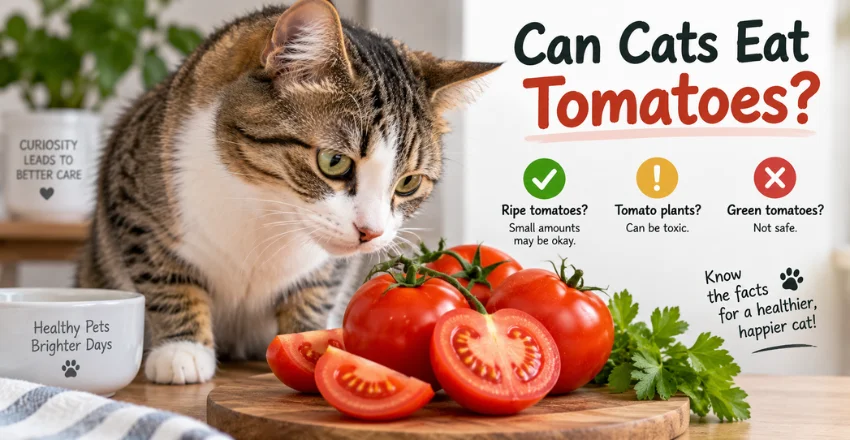
Tomatoes contain nutrients that benefit people, including potassium and several vitamins. Your pet’s dietary needs differ significantly from yours. Plant foods cannot replace the animal-derived nutrients required in a balanced feline diet. Cornell states that obligate carnivores rely on nutrients found in animal products. Their natural nutritional pattern emphasizes protein and fat with limited carbohydrates. A complete commercial diet is therefore a better nutritional foundation.
That distinction explains why “non-toxic” does not automatically mean “recommended.” A food can be unlikely to poison an animal yet provide little meaningful benefit. Ripe tomato belongs in that category for most household felines.
Safer Treat Ideas
Choose simple foods that better fit feline nutritional needs. Plain, fully cooked animal protein is usually more appropriate than vegetables or fruit. Ask your veterinarian before changing the diet of a pet with medical conditions.
Possible occasional options include:
- Plain cooked chicken
- Plain cooked turkey
- Small pieces of cooked beef
- Vet-approved commercial feline treats
Keep all extras modest. A complete and balanced diet should still provide most daily nutrition. Avoid seasoning, onion, garlic, sauces, bones, and heavily salted foods.
How to Keep Tomato Plants Away From Curious Pets
Indoor gardeners should place tomato plants out of reach. A high shelf only works if your animal cannot climb nearby furniture. Closed rooms, secure plant cabinets, or inaccessible outdoor areas provide stronger protection. Garden owners should also collect fallen green fruit and pruned stems. Curious animals may investigate fresh cuttings on the ground. Removing plant debris reduces an avoidable source of exposure.
Households with persistent plant chewers may need broader prevention. Discuss the behavior during regular veterinary care if it becomes frequent. Browse Tablogy’s Pets section for more pet-care topics.
The Bottom Line
A tiny amount of fully ripe red tomato is generally considered non-toxic. Green tomatoes and tomato plant material are the main safety concern. Prepared tomato products also warrant caution because onion, garlic, and seasonings may add risk. When an exposure involves leaves, stems, vines, or unripe fruit, contact your veterinarian promptly.
Keep the plant or product information available during the call. For everyday feeding, a complete feline diet remains safer and more useful than tomato.
Frequently Asked Questions
Can cats eat tomatoes every day?
No regular tomato serving is necessary for a healthy feline diet. Ripe flesh may be non-toxic in a tiny amount, but it offers limited nutritional value. Complete cat food remains the better everyday choice.
What happens if my cat eats a small piece of ripe tomato?
A tiny piece of plain, fully ripe tomato is unlikely to cause toxic effects. Watch for vomiting, diarrhea, or unusual behavior afterward. Call your veterinarian if symptoms develop or if the exposure involved other ingredients.
Are cherry tomatoes poisonous to felines?
A fully ripe cherry tomato has the same basic ripe-versus-green distinction as larger varieties. The green fruit and attached plant material remain the bigger toxicity concern. Do not offer a whole cherry tomato because its size may also present a choking risk.
Can kittens have ripe tomatoes?
Kittens do not need tomato in their diet. Their small size also makes careful portion control especially important. Stick with age-appropriate complete kitten food unless your veterinarian recommends something different.
Should I call a veterinarian after my pet eats tomato leaves?
Yes, veterinary advice is appropriate after your pet eats tomato leaves, stems, vines, or green fruit. The ASPCA classifies the tomato plant as toxic to felines. Prompt advice lets you assess the exposure before symptoms become severe.