
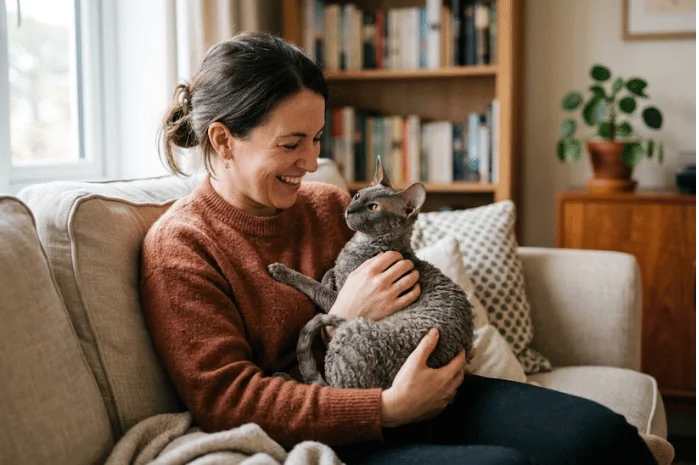
If you want an active cat that stays playful, the Cornish Rex deserves careful attention. Its signature coat feels soft and wavy, while oversized ears create an unmistakable profile. That unusual appearance comes with specific needs for warmth, social time, enrichment, and gentle coat care.
The Cornish Rex is an athletic, affectionate cat with a short, rippled coat and unusually large ears. These cats shed less than many breeds, but they are not hypoallergenic. They suit homes that can provide daily play, warmth, social contact, gentle grooming, and routine veterinary care.
Breed at a Glance
| Trait | Typical Description |
|---|---|
| Origin | Cornwall, England; breed mutation first documented in 1950 |
| Adult weight | Roughly 5–10 pounds |
| Coat | Short, soft, closely waved, with no normal outer guard coat |
| Temperament | Social, playful, intelligent, active, people-focused |
| Activity level | High |
| Grooming | Light coat handling, plus ear, nail, and occasional bathing care |
| Life expectancy | Commonly about 9–15+ years across major breed sources |
| Colors | Accepted in many colors and patterns |
| Family fit | Often suitable for interactive families and multi-pet homes |
| Allergy status | Low shedding, but not hypoallergenic |
Major breed and veterinary sources agree on the cat’s social nature, unusual coat, and active personality. Published lifespan ranges differ slightly because organizations use different population information. Individual health, genetics, nutrition, and veterinary care also affect longevity.
Key Takeaways
- Expect an energetic cat that wants frequent interaction with people.
- The thin coat offers less insulation from cold and strong sunlight.
- Low shedding does not make this breed safe for everyone with cat allergies.
- Gentle grooming matters because the fine coat can be delicate.
- Daily play, climbing opportunities, and mental enrichment suit its active nature.
- Responsible sourcing should include health information and clear veterinary records.
What Makes the Cornish Rex Different?
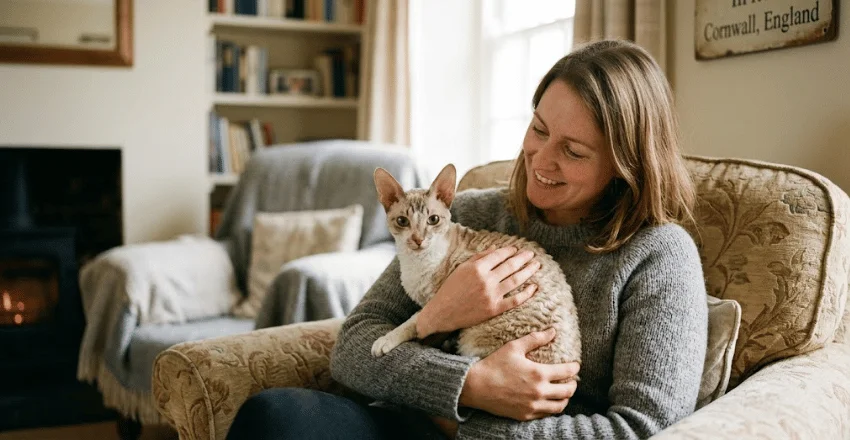
The breed began in Cornwall, England, in 1950, when a curly-coated kitten named Kallibunker appeared in a farm litter. Breeding later showed that the unusual coat trait was recessive. CFA says cats from this line reached California in 1956 and helped establish the breed in America.
Most cats have several types of hair forming their coats. This breed lacks the usual protective guard hairs and carries an exceptionally fine, waved covering. Those tight waves create the soft texture that immediately separates these cats from ordinary shorthairs.
TICA recognizes the breed in many colors and patterns. Its light coat provides less protection against cold temperatures and intense sunlight. Warm beds, comfortable indoor temperatures, and shaded resting areas can help protect sensitive skin.
Personality and Temperament
These cats tend to be social, curious, playful, and interested in household activity. TICA describes them as intelligent animals that can keep kitten-like behavior well into adulthood. Many enjoy meeting people and staying physically close to family members.
Their athletic build also supports impressive jumping and climbing. PetMD recommends interactive play and enrichment through climbing spaces, puzzles, training, and games such as fetch. Owners seeking another social breed can compare Tablogy’s Lynx Point Siamese guide for additional perspective.
A home that remains empty for long periods may require extra planning. Toys provide useful stimulation, but they cannot replace every form of social contact. Predictable play sessions before and after work can provide exercise and focused attention.
Grooming and Everyday Care
Coat care should remain gentle because the fine hairs can be fragile. CFA says regular combing is unnecessary, while occasional bathing may help cats that become oily. PetMD notes that some thin-coated individuals may need bathing every one or two weeks.
That difference shows why a rigid bathing schedule does not suit every individual. Watch the skin and coat for oiliness, irritation, or other changes. Use feline-safe grooming products and ask your veterinarian about persistent skin problems.
Ears and toes can also develop oily buildup, according to TICA. Regular ear checks, nail care, and gentle cleaning can become part of a predictable routine. Tablogy’s guide to routine veterinary checkups explains what owners can expect from preventive visits.
Health Concerns Owners Should Understand
No pedigree guarantees that an individual cat will develop, or avoid, a particular condition. PetMD lists progressive retinal atrophy and hypertrophic cardiomyopathy among health concerns associated with this breed. TICA also discusses hypertrophic cardiomyopathy, patellar luxation, and possible dermatological problems.
Those risks make responsible sourcing more important than promises about perfect health. Ask breeders about parental health histories, veterinary examinations, genetic screening, and conditions occurring within their lines. Keep copies of vaccination, testing, and treatment records for your veterinarian.
Routine examinations give your veterinarian opportunities to monitor the heart, eyes, joints, skin, teeth, and general body condition. Tell the clinic about breathing changes, reduced activity, unusual walking, vision problems, or persistent skin symptoms. Tablogy also explains what happens during a first visit to an animal hospital.
Feeding, Exercise, and Weight
An athletic cat still needs food portions matched to its individual energy needs. PetMD recommends discussing calorie requirements with a veterinarian instead of relying only on package instructions. Age, activity, current weight, ideal weight, and health can change the appropriate amount.
Daily movement should include more than access to an open room. Tall cat furniture, wand games, puzzle feeders, and short training sessions provide physical and mental activity. Rotating activities can keep a curious cat interested without constantly buying new toys.
What Does This Breed Cost in the United States?
U.S. kitten prices can vary sharply among breeders, bloodlines, locations, and individual cats. An August 2026 review of named American catteries found published prices ranging from about $950 to $3,500. That figure represents a market snapshot rather than a standard price for every seller.
Price alone should never determine where you get a kitten. A higher price does not automatically prove better health, ethical breeding, or responsible socialization. Buyers should evaluate records, contracts, living conditions, communication, and veterinary history alongside cost.
Rescue can provide another route, although availability may vary greatly by region. Start with breed rescues, general shelters, and established pet adoption services rather than unfamiliar advertisements. Be cautious when sellers pressure you to send money before providing meaningful records or identification.
Is This Curly-Coated Cat Right for Your Home?
This breed suits households that want an involved companion rather than a distant pet. Families should be ready for climbing, play, curiosity, and frequent requests for attention. TICA specifically describes these cats as suitable for families with children, other pets, or regular visitors.
Individual personality still matters more than a breed description. Children need respectful handling rules, while dogs and other cats need gradual introductions. Every new cat should have quiet resting spaces and elevated escape routes.
The breed may be harder to manage if you want a highly independent pet. Its limited coat protection also makes an indoor, temperature-controlled lifestyle sensible for many homes. Meet adult cats when possible before deciding whether the activity level suits your household.
Before bringing a kitten home, collect health records and arrange a veterinary appointment. Prepare climbing furniture, scratching surfaces, safe sleeping areas, toys, food, water, and a secure carrier. Tablogy’s broader Pets section has more guides for preparing and caring for companion animals.
Frequently Asked Questions
Is the Cornish Rex hypoallergenic?
No cat can reliably be described as completely hypoallergenic. Cat allergens come from proteins associated with saliva, skin, and other secretions rather than hair length alone. Reduced shedding may help some individuals, but allergic reactions can still occur.
Do these cats shed?
Yes, although their unusual single-layer coat generally sheds less than a typical cat’s coat. Less visible hair around the home does not mean shedding stops completely. Coat condition can also differ among individual cats.
How long do they usually live?
Published estimates vary among recognized breed and veterinary sources. TICA gives roughly 9–13 years or more, while PetMD lists about 11–15 years. Preventive care, genetics, nutrition, safety, and body condition can influence an individual cat’s lifespan.
Are these cats good with children and other pets?
They are commonly described as sociable cats that can enjoy active family homes. TICA specifically notes compatibility with children, other animals, and frequent visitors. Safe introductions and respectful handling still matter because every animal has an individual temperament.
How much does a kitten cost in the U.S.?
Prices differ widely, so there is no universal American price. A 2026 market review found that U.S. catteries publish prices from roughly $950 through $3,500. Health documentation and breeder practices deserve as much attention as the advertised number.
A Smart Match for an Interactive Home
This curly-coated breed offers much more than an unusual appearance. Its strongest traits are social engagement, athletic play, intelligence, and a desire to participate in household life. Owners should balance those qualities against its need for companionship, warmth, enrichment, and thoughtful health care.
When possible, spend time with the individual cat before making a long-term commitment. Review health information carefully and choose a breeder or rescue that answers detailed questions without pressure. Good preparation gives both the cat and your household a stronger start.