
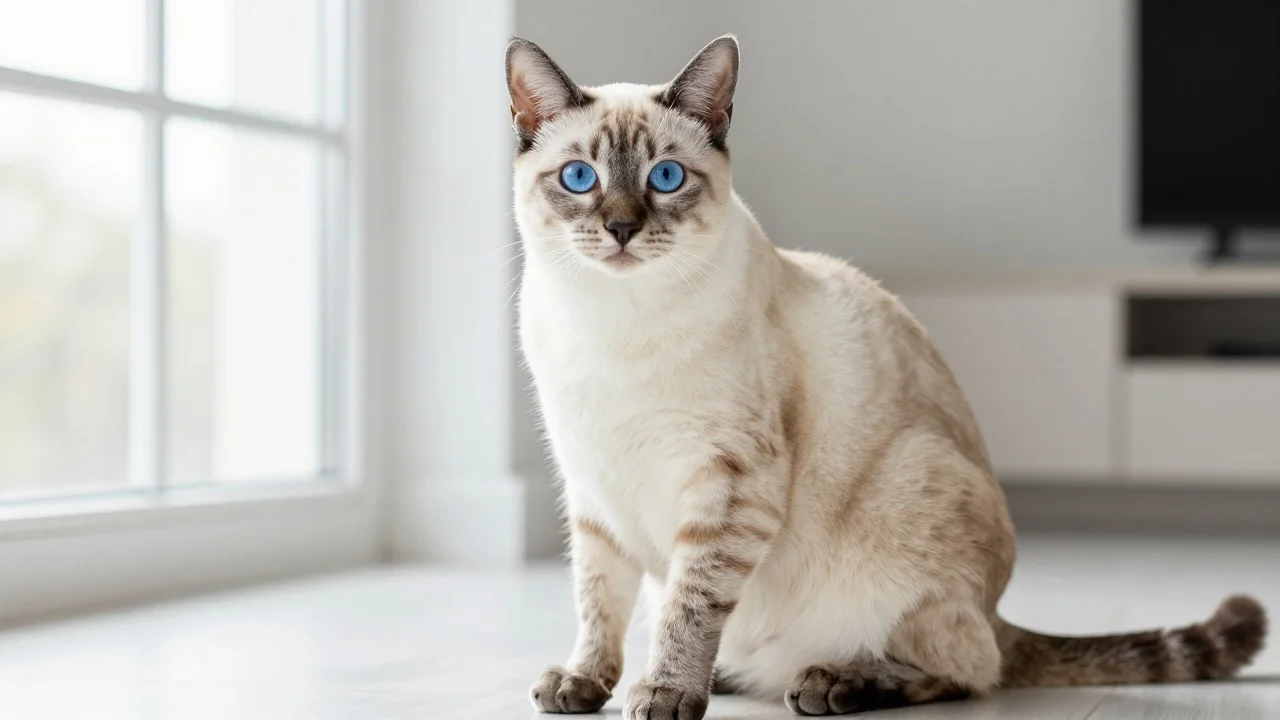
A Lynx Point Siamese catches attention quickly: bright blue eyes, a pale body, and tabby-like stripes across the face, ears, legs, and tail. Yet the name can be confusing because “lynx point” describes a color pattern rather than a completely separate cat breed. Understanding that distinction helps U.S. cat owners know what they are adopting, what personality to expect, and how to care for these social cats.
A Lynx Point Siamese is a colorpoint cat whose darker face, ears, legs, and tail show tabby striping instead of solid color. The look combines blue eyes, a pale body, and striped points. Depending on the registry and pedigree, the cat may be classified as Siamese or Colorpoint Shorthair rather than a separate breed.
Lynx Point Cats at a Glance
| Trait | Typical Description |
|---|---|
| Pattern | Colorpoint with tabby or “lynx” markings |
| Eye color | Blue |
| Coat | Short, fine, close-lying |
| Size | Medium |
| Typical adult female weight | About 5–8 pounds |
| Typical adult male weight | About 8–12 pounds |
| Temperament | Social, vocal, intelligent, playful |
| Grooming | Low to moderate |
| Life expectancy | Commonly 10+ years |
| Other names | Tabby point Siamese, lynx point cat |
| Best suited for | Interactive households that can provide attention and enrichment |
What Is a Lynx Point Siamese?
The term lynx point refers to a pointed cat whose darker extremities contain a tabby pattern rather than one solid shade. TICA explains that pointed cats have color concentrated on the face, feet, and tail, and when those points contain tabby markings, the pattern is called lynx point. Importantly, a pointed or lynx-pointed cat is not automatically a pedigreed Siamese because the same color pattern occurs in several breeds and in domestic cats without documented pedigrees.
This distinction matters when someone finds a blue-eyed, striped-point kitten at a U.S. shelter and is told it “looks Siamese.” Appearance can suggest a Siamese-type color pattern, but it cannot prove ancestry without pedigree records or other reliable background information. For a companion cat, that usually does not matter, but buyers seeking a registered pedigreed kitten should understand exactly what a breeder means by the name.
Is a Lynx Point Cat a Real Siamese?
The answer depends partly on which cat registry’s terminology you use. TICA’s Siamese information includes lynx point, or tabby-pointed, colors within its description of Siamese, while the Cat Fanciers’ Association limits its Siamese standard to seal, chocolate, blue, and lilac solid points.
Under the CFA system, cats with Siamese type and lynx-patterned points are shown as Colorpoint Shorthairs, and CFA specifically describes lynx-point classes in colors such as seal, chocolate, blue, lilac, red, and cream. That means two people can use different breed labels while talking about cats with a very similar appearance. The most accurate description for an individual cat therefore depends on its pedigree, registry, and breeding history rather than coat markings alone.
What Does a Lynx Point Cat Look Like?
The signature appearance combines a relatively light-colored torso with darker striped areas on the face, ears, legs, paws, and tail. Instead of the smooth dark mask seen on a classic seal point, a lynx point usually shows visible facial lines, leg barring, and rings along the tail. Blue eyes provide the strongest visual link to the broader family of Siamese-style pointed patterns.
The body type depends on the cat’s actual ancestry, so not every cat labeled a lynx point will have the extreme wedge-shaped head and long, slender frame associated with modern show Siamese. A pedigreed Siamese or Colorpoint Shorthair may have a refined, muscular body with large ears and an angular profile, while a shelter cat with similar markings may have a rounder head or heavier build. Coat pattern tells you what the fur looks like, not necessarily what every part of the cat’s body should look like.
Common Lynx Point Colors
| Color | Typical Appearance |
|---|---|
| Seal lynx point | Dark seal-brown stripes against a cream or pale-fawn body |
| Blue lynx point | Blue-gray striping with a cool bluish-white or pale body |
| Chocolate lynx point | Warm milk-chocolate striping against an ivory body |
| Lilac lynx point | Soft, diluted pinkish-gray or frosty markings |
| Red lynx point | Warm red or apricot-toned tabby points |
| Cream lynx point | Lighter cream-colored tabby points |
Registry standards describe these colors more precisely than everyday pet labels do. CFA, for example, specifies distinct point colors, body backgrounds, nose leather, and paw-pad colors for its Colorpoint Shorthair lynx classes. In a pet home, however, owners are more likely to notice the contrast between the pale body, striped points, and blue eyes than the finer show-standard distinctions.
Why Do These Cats Have Striped Points?
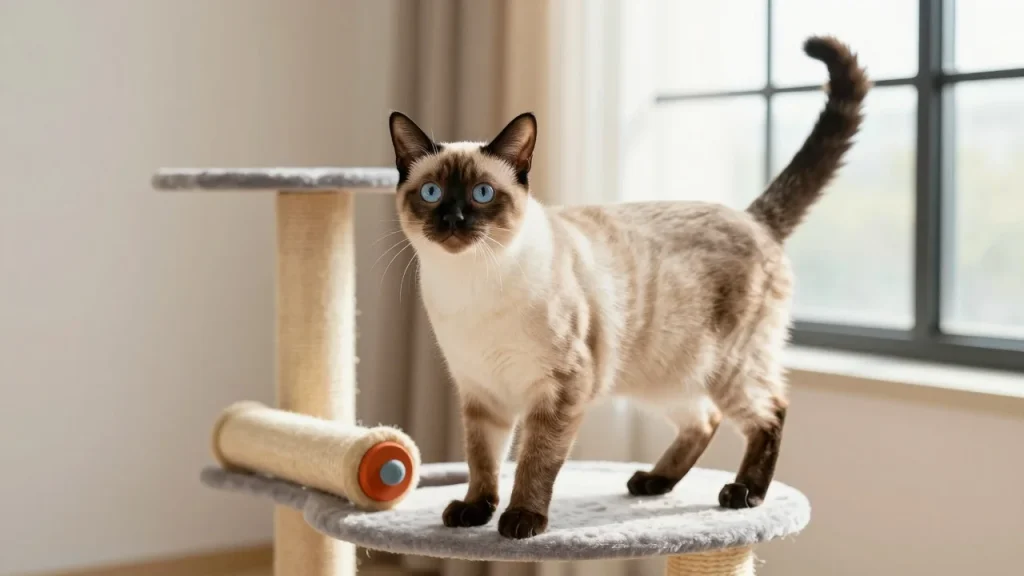
The coat is essentially the result of two visible genetic effects working together: colorpoint restriction and a tabby pattern. The University of California, Davis Veterinary Genetics Laboratory explains that the Siamese colorpoint mutation affects the TYR gene and produces temperature-sensitive pigmentation. Cooler areas such as the ears, face, paws, and tail therefore grow darker than the warmer parts of the torso. The tabby component adds banding and stripes to those colored areas.
This temperature-sensitive pigment system also helps explain why pointed kittens can look much lighter when young and develop stronger contrast as they mature. Body shading may become more noticeable with age, and the exact depth of color varies among individuals. A cat becoming somewhat darker over time is therefore not necessarily changing into a different color variety; it can be part of normal colorpoint development.
Personality and Temperament
A well-bred Siamese-type cat is usually much more than a striking coat. TICA describes Siamese cats as highly social, people-oriented, playful, intelligent, athletic, and famously vocal, with many following their family members through the house and actively seeking interaction. They can also enjoy children, other cats, and cat-friendly dogs when introductions and handling are appropriate.
You may see claims online that Lynx Points are automatically quieter, calmer, or less demanding than ordinary Siamese cats because of supposed tabby ancestry. Coat pattern alone does not guarantee those personality differences, and individual temperament is influenced by genetics, early socialization, environment, age, and life experience. A prospective owner should therefore expect the possibility of classic Siamese traits, especially intelligence, sociability, activity, and vocal communication, rather than choosing one solely because a website promises a milder personality.
How Big Do Lynx Point Cats Get?
For pedigreed Siamese, TICA describes the breed as medium-sized and lists adult females at approximately 5–8 pounds and adult males at approximately 8–12 pounds. Individual Lynx Point cats may fall outside those ranges, particularly when the name is being used descriptively for a domestic cat rather than a pedigreed Siamese. Body condition is more important than trying to make every cat match a particular number on the scale.
A healthy Siamese-style cat often looks lean because the breed is naturally long, fine-boned, and athletic. That slender appearance should not be confused with being underweight, just as a heavier mixed-ancestry Lynx Point is not automatically overweight. Your veterinarian can assess body condition and recommend an appropriate target weight for the individual cat.
How Long Do Lynx Point Cats Live?
TICA gives Siamese cats a life expectancy of 10 years or more and notes that some live beyond 20 years. Genetics, preventive veterinary care, nutrition, dental health, indoor safety, and maintaining a healthy weight can all influence an individual cat’s longevity. A coat pattern by itself does not determine lifespan.
That means owners should be prepared for a potentially long commitment rather than treating the cat’s distinctive appearance as the main consideration. Regular wellness examinations become increasingly important as a cat moves from adulthood into its senior years. Good preventive care also gives a veterinarian a chance to identify subtle changes before they become more difficult to manage.
How to Care for a Lynx Point Cat
Lynx Point cats generally do not require complicated coat maintenance, but they do need substantial social and mental engagement. Their short coat is one of the easier aspects of ownership, while keeping an intelligent Siamese-type cat sufficiently occupied may require more daily effort. A predictable routine that combines grooming, interactive play, climbing, feeding, training, and attention works well for many of these cats.
Grooming and Dental Care
A short, close-lying Siamese coat generally needs only a light weekly brushing or combing to remove loose hair. TICA also recommends regular nail care, ear checks, and dental hygiene as part of routine Siamese care. Starting these habits while a cat is young can make handling much easier later in life.
Dental care deserves particular attention because oral disease can affect cats of any breed and may become more significant with age. Use feline-safe products and ask your veterinarian to show you an appropriate home-care routine rather than using human toothpaste. Professional dental evaluation should be based on the individual cat’s examination and veterinary recommendations.
Exercise and Mental Enrichment
Siamese cats are intelligent, athletic, and capable jumpers, so an empty room and a single toy may not keep them satisfied. TICA recommends enrichment such as cat trees, elevated perches, puzzle toys, interactive games, and training activities that encourage cats to think and move. Some Siamese even learn games such as fetch or become comfortable with carefully introduced leash walking.
Aim for several opportunities to play throughout the day rather than relying only on independent toys. Wand toys, food puzzles, climbing furniture, scratching surfaces, and short positive-reinforcement training sessions can all add variety. Rotate toys periodically so familiar objects feel interesting again without requiring a constant stream of new purchases.
Food and Weight Management
Feed a complete and balanced cat food appropriate for your cat’s life stage, health status, and calorie requirements. An athletic cat may appear naturally slim, but free-feeding more calories than it uses can still lead to unwanted weight gain. Your veterinarian can recommend portion sizes and feeding adjustments based on body condition rather than a generic breed chart.
Fresh water should always be accessible, and some cats prefer multiple water stations or fountains. Wet food can be one way to increase dietary moisture, although the best feeding plan depends on the individual cat. Make changes gradually when possible, particularly if your cat has a sensitive digestive system or an existing medical condition.
Social Needs
A lynx point cat may not be the best match for a home looking for a highly independent cat that rarely interacts with people. TICA notes that Siamese are extremely social and may dislike being alone for extended periods, which is why some households provide a compatible feline or other pet companion.
A second pet is not an automatic solution, however, because compatibility matters more than simply putting two animals in the same house. Owners who work outside the home can also provide scheduled play, environmental enrichment, window perches, safe climbing areas, and focused attention before and after work. Watch the individual cat’s behavior rather than assuming every Siamese will respond identically.
Health Concerns Worth Knowing About
The lynx pattern itself is primarily a coat characteristic, so owners should focus on health concerns relevant to the cat’s actual ancestry rather than assuming that stripes create a special set of diseases. TICA notes amyloidosis among health concerns reported in Siamese, while veterinary sources also identify Siamese among breeds predisposed to progressive retinal atrophy, an inherited disorder that can eventually impair vision.
These risks do not mean that every lynx point cat will develop genetic disease. They do make preventive veterinary care and responsible breeding practices important, especially when purchasing a pedigreed kitten. For more general help evaluating veterinary care, Tablogy readers can also use the site’s guide to choosing the right veterinarian for your furry family member.
Health topics worth discussing with your veterinarian include:
- Eye health and any changes in night vision or navigation.
- Dental and gum health.
- Appropriate vaccination and parasite-prevention schedules.
- Healthy body weight and nutrition.
- Any family history of inherited disease.
- Changes in appetite, drinking, behavior, breathing, or activity.
- Age-appropriate wellness testing as the cat becomes older.
If you are buying from a breeder, ask for health information about the kitten and its parents instead of accepting vague statements that a line is “completely healthy” with no supporting detail. TICA’s U.S.-relevant pet buyer guidance recommends checking breeder credibility, asking for parental health and genetic records, reviewing health guarantees, and using a written contract. A responsible seller should be comfortable answering detailed questions rather than pressuring you to send money immediately.
Are These Cats Good Family Pets?
They can be excellent family companions for households that enjoy an involved, communicative cat. Siamese are known for seeking attention and interaction, and TICA describes them as able to live with children, other cats, and cat-friendly dogs.
Successful family life still depends on respectful handling and thoughtful introductions. Children should learn to recognize when a cat wants space, while dogs should be introduced gradually and prevented from chasing or cornering the new arrival. Providing elevated escape routes and quiet resting areas gives the cat control over social interactions and can make a multi-pet household easier to manage.
Are Lynx Point Cats Hypoallergenic?
No cat breed, including the lynx point, can reliably be considered hypoallergenic. The American College of Allergy, Asthma & Immunology explains that cats produce allergens in their skin, fur, and saliva and that studies have not established a truly hypoallergenic cat breed. Short hair therefore should not be treated as proof that a cat is safe for someone with cat allergies.
If someone in your household has known cat allergies or asthma, discuss the situation with an allergist before adopting. Spending time with the individual cat can provide useful practical information, but it cannot guarantee that symptoms will never occur after longer exposure. Health considerations should take priority over online claims that a particular coat color or breed is “allergy-free.”
Finding a Lynx Point Cat in the United States
Start by deciding whether you primarily want the lynx-point appearance or a pedigreed cat from a specific registry. If appearance and companionship matter most, shelters and rescue groups sometimes have colorpoint domestic cats whose striped points and blue eyes fit the Lynx Point description. If pedigree matters, use established cat organizations and verify registration, health records, contracts, and breeder practices rather than relying on social-media advertising alone.
Before committing to a kitten or adult cat, evaluate the individual animal as carefully as the color. A reputable source should be willing to discuss health history, vaccinations, socialization, current diet, personality, and what happens if the placement does not work out. Beautiful markings are a bonus, but health and temperament are what determine whether the relationship succeeds over the next decade or longer.
Questions to Ask Before Bringing One Home
- Is this cat pedigreed, and if so, with which registry?
- How is the cat officially registered: Siamese, Colorpoint Shorthair, or another breed?
- Can I see the pedigree and registration documents?
- What health screening has been performed on the parents?
- What vaccines and veterinary care has the kitten received?
- How was the kitten socialized?
- Is there a written health guarantee and return policy?
- Can I meet the kitten and, when practical, its parents?
- What diet and litter is the cat currently accustomed to?
- What is this individual cat’s temperament like?
For additional pet-focused reading, browse the Tablogy Pets section.
Is a Lynx Point Siamese Right for You?
A Lynx Point Siamese can be a rewarding choice if you want an intelligent, interactive cat and enjoy an animal that actively participates in household life. The striped points and vivid blue eyes make the pattern memorable, but prospective owners should pay equal attention to the social needs, enrichment, veterinary care, and long-term commitment associated with Siamese-type cats. Understanding the difference between a coat description and a verified breed also helps you avoid misleading advertisements and choose a cat for the right reasons.
For many owners, the best match will not be the kitten with the darkest stripes or the most unusual color. It will be the healthy, well-socialized cat whose personality fits the household and whose source can provide transparent information about its background and care. Whether that cat comes from a reputable breeder or a U.S. rescue, responsible preparation gives both you and your new companion the strongest start.
Frequently Asked Questions
Is a lynx point cat rare?
Lynx points are distinctive, but the pattern is established and is not so rare that every blue-eyed striped-point cat should command an extraordinary price. Availability can vary by region, registry, breeder, rescue population, and specific color. Be cautious when a seller uses the word “rare” mainly to justify pressure or unusually high pricing.
Is a lynx point the same as a tabby point Siamese?
In everyday use, lynx point and tabby point generally refer to the same basic idea: a colorpoint cat with tabby markings in the points. TICA explicitly defines a pointed cat with tabby markings as a lynx point, while “tabby point” is especially common terminology outside the United States. The exact registered breed name still depends on the cat’s pedigree and registry.
Do lynx point cats get darker with age?
They can develop more visible color and body shading as they mature. Siamese-style colorpoint pigmentation is temperature-sensitive, meaning pigment production is stronger in cooler parts of the body, while age and individual genetics can also affect the final appearance. A kitten that starts very pale may therefore look considerably more defined as an adult.
Are lynx point cats aggressive?
There is no sound reason to assume that the lynx coat pattern itself makes a cat aggressive or non-aggressive. Siamese cats are typically described as social, active, intelligent, and highly interactive, but any individual can become fearful or defensive when stressed or handled poorly. Early socialization, respectful handling, adequate enrichment, and the individual cat’s history matter more than its striped points.
Can a lynx point cat be left alone during the day?
Many healthy adult cats can spend part of the day alone, but Siamese are notably social and may struggle with long periods of isolation. TICA specifically describes Siamese as people-oriented cats that thrive on attention and notes that some households keep another compatible pet for company.
If your workday regularly keeps you away, provide enrichment and make interactive time a daily priority. A compatible second animal may help some cats, but it should be chosen and introduced carefully rather than treated as a guaranteed fix. Persistent vocalization, destructive behavior, overgrooming, appetite changes, or other concerning behavior should be discussed with a veterinarian.
How can I tell whether my Lynx Point Siamese is purebred?
You generally cannot prove purebred status from color, blue eyes, head shape, or photographs alone. TICA notes that many breeds and ordinary domestic cats can display pointed coloration, so a cat that looks Siamese may have no documented Siamese pedigree.
Reliable pedigree and registration records are much stronger evidence than appearance. If you adopted a cat without those records, it is perfectly reasonable to describe it as a lynx-point or Siamese-type cat rather than making an ancestry claim that cannot be verified. For a family companion, personality, health, and the bond you build matter far more than proving a label.