
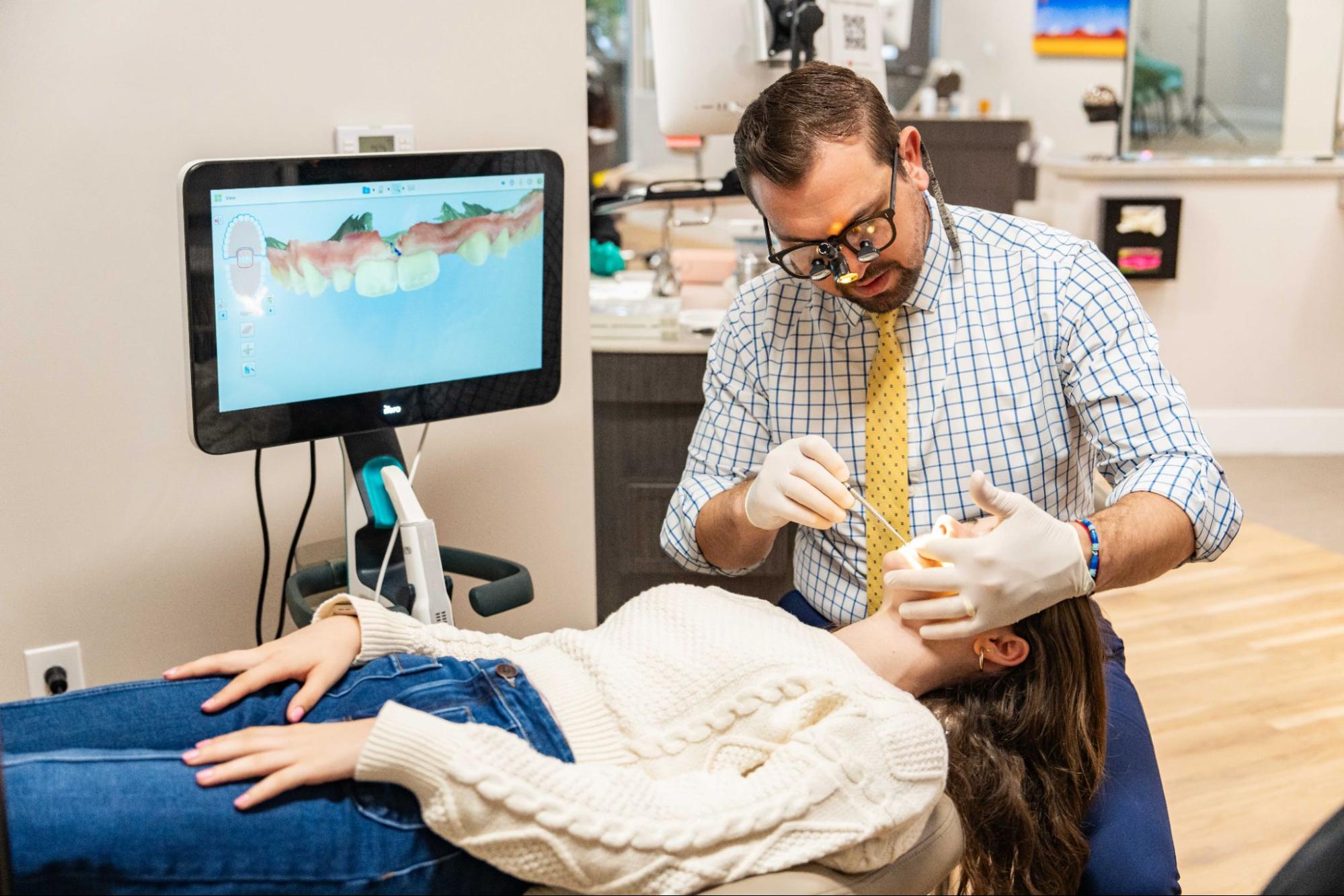
When you face a new dental problem, you may feel worry, shame, or confusion. You wonder what the next step is and who will help you make sense of it. A general dentist stands beside you during this hard moment. The dentist listens, checks your mouth, and explains what is going on in clear terms. Then the dentist walks you through choices, costs, and timelines so you can decide with confidence. You never need to guess alone. Instead, you get a clear path from the first exam through follow-up care. A dentist in Suisun City does this every day for patients with cavities, gum problems, or broken teeth. You get plain language, honest options, and a steady guide. This support turns fear into action and confusion into a simple plan you can follow.
Step 1: Listening To Your Story
Planning starts with your story. You sit in the chair and share what hurts, what bothers you, and what you hope to change. You may talk about pain, trouble chewing, or how your smile looks in photos.
The dentist pays close attention. You may feel rushed in other parts of life. Here, you deserve time and respect. Your words shape every step that follows.
During this first step, the dentist will usually
- Ask about your medical history and medicines
- Ask about past dental work and past fears
- Ask about your budget and schedule limits
This talk lays the ground for safe and clear choices.
Step 2: Exam And Simple Explanations
Next, the dentist checks your teeth, gums, and bite. You may have X-rays or photos. These tools reveal problems you cannot see in a mirror.
You should expect plain language. A strong dentist avoids complex terms. Instead, the dentist might say
- “You have a small hole in this tooth. That is a cavity.”
- “Your gums are swollen. That means infection under the surface.”
- “This tooth is cracked. It needs support, or it may break more.”
You also have the right to clear facts. The National Institute of Dental and Craniofacial Research gives easy patient guides on common problems at https://www.nidcr.nih.gov/health-info. You can use these guides to review what your dentist explains.
Step 3: Laying Out Your Options
After the exam, the dentist turns findings into choices. You should never hear only one path unless it is an emergency. Instead, you hear at least three things
- What happens if you treat soon
- What happens if you wait
- What happens if you ignore the problem
The dentist may offer several treatments. Each choice has trade-offs. Each choice has a cost in money, time, and comfort.
Here is a simple comparison for a tooth with a deep cavity
| Option | Goal | Short Term Impact | Possible Long Term Result |
|---|---|---|---|
| Filling | Remove decay and close space | One visit. Numbness. Quick recovery | Tooth stays in mouth if decay was not very deep |
| Root canal and crown | Clean inside tooth and protect outside | One or two visits. Longer time in chair | Tooth stays in mouth and can chew again |
| Extraction | Remove tooth | One visit. Bleeding and soreness | Gap that may affect chewing and smile |
The dentist explains which choice fits your mouth, your health, and your money. Then you decide.
Step 4: Talking About Cost and Insurance
Money stress can silence people. You may fear that you cannot afford care, so you stop asking questions. A steady dentist knows this and brings up cost early.
You should hear
- What each option costs in the office
- What your insurance may pay
- What your share may be
The dentist may work with staff who know insurance rules. They can check your plan and explain covered services. The Centers for Medicare and Medicaid Services shares plain facts about dental coverage at https://www.medicaid.gov/medicaid/benefits/dental-care/index.html. You can review this site if you use Medicaid.
Step 5: Building A Clear Timeline
Once you pick a treatment path, the dentist sets a timeline. This timeline keeps you from feeling lost. It shows when each step will happen and what you can expect.
For a common case, the plan may look like this
- Week 1. Fillings on back teeth. Focus on pain relief
- Week 3. Deep cleaning for gum infection
- Week 6. Crown on weak tooth
- Month 3. Checkup and small touch-ups
You see the whole picture. You know that change will take time, but also that the steps are clear and within reach.
Step 6: Respecting Fear And Past Trauma
Many people carry dental fear from childhood or past harm. A caring dentist does not brush past this. Instead, the dentist asks about your fear and plans with it in mind.
You might agree on
- Shorter visits with fewer steps each time
- Hand signals so you can pause care
- Music, numbing, or other comfort tools
This shared control can soften old pain and help you stay on track.
Step 7: Turning Treatment Into Daily Habits
Good treatment planning does not stop when you leave the office. Your daily habits hold the gains. Routine brushing, flossing, and checkups keep new problems from forming.
The dentist will connect treatment to simple home steps such as
- Brushing twice a day with fluoride paste
- Cleaning between teeth once a day
- Limiting sweet snacks and drinks
You do not need special tools. You need steady habits and clear guidance.
Step 8: Adjusting The Plan Over Time
Life changes. Health changes. Money changes. A strong plan bends with you. During follow-up visits, the dentist checks what worked and what still feels hard.
The dentist may
- Move some care to a later date if pressure at home grows
- Bring one step forward if a tooth starts to hurt more
- Change the home care plan if current tools do not work for you
You and the dentist share the same goal. A mouth that lets you eat, speak, and smile without fear.
How You Can Take An Active Role
You are not a passive body in a chair. You are the main voice in every decision. You can support your own plan when you
- Write down questions before each visit
- Ask the dentist to repeat or draw pictures if you do not understand
- Say what you can afford and what you cannot
Honest talk saves time and protects your health. Strong planning is not about perfection. It is about steady steps that fit your real life.
Apart from that, if you want to know more about 5 Benefits Of Composite Dental Fillings Over Traditional Options then visit our Health category.